



















You have definitely seen chintz before. Perhaps on your grandmother’s favourite sofa… the one nobody is permitted to sit on. Perhaps on a teapot at a village fete or covering the walls of an English country house. Chintz is that glorious riot of blooms, birds and trailing vines that the West adopted as its unofficial interior personality. It has been called fusty, frumpy and terribly twee. Then, with the reliability of an English summer shower, it turns up in the front row again looking fabulous. Cabbage roses on a crossbody? Chintz. Peonies on a tea dress? Also chintz.
Today, “chintz” can sound slightly old-fashioned, conjuring images of maximalist interiors, but the textile’s story is far more glamorous. It was once a luxury export so coveted in Europe that governments actually tried to ban it. While the West has spent centuries alternately loving, loathing and rediscovering it, chintz has never gone anywhere. And here is a twist worthy of a proper period drama. Did you know it has Indian origins?
Before It Became A Pretty Print
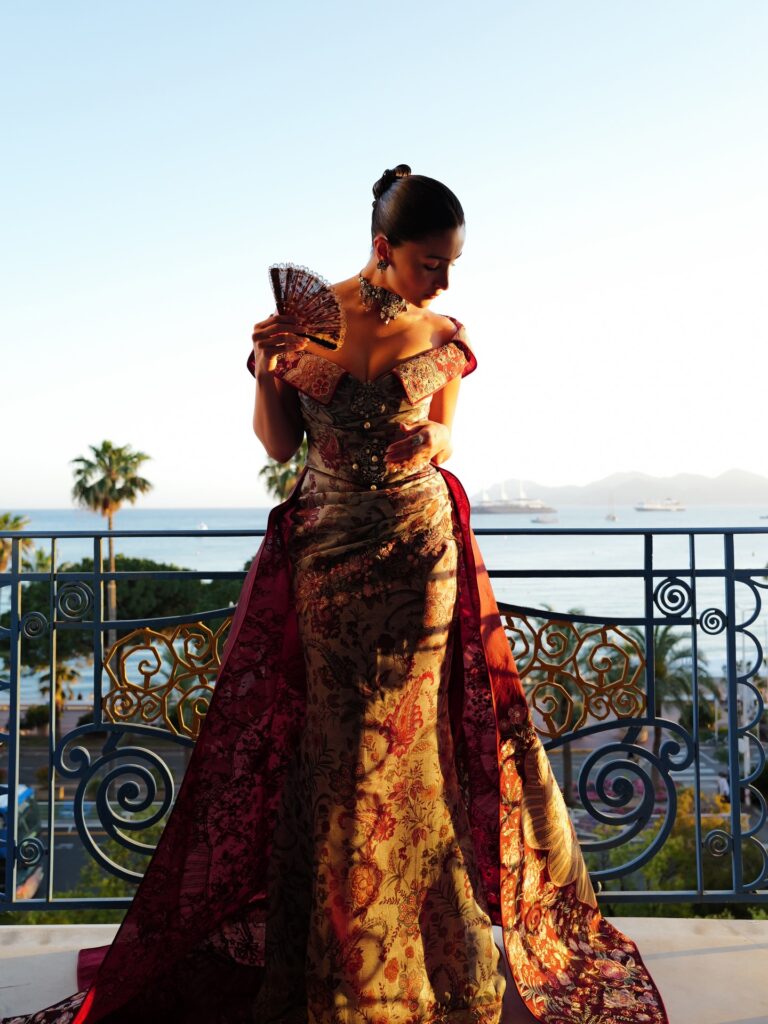
Strictly speaking, chintz is not just any floral fabric. The word comes from the Hindi chint or chitta, meaning spotted or variegated. But there is a lot more to chintz than a riot of flowers. Historically, it referred to finely decorated cotton textiles produced in India using sophisticated combinations of hand painting, mordant dyeing, resist techniques and, in some cases, woodblock printing. The cloth was prized not simply for its intricate patterns but for something that European textile makers struggled to replicate: colour that was vivid, fast and durable on cotton.
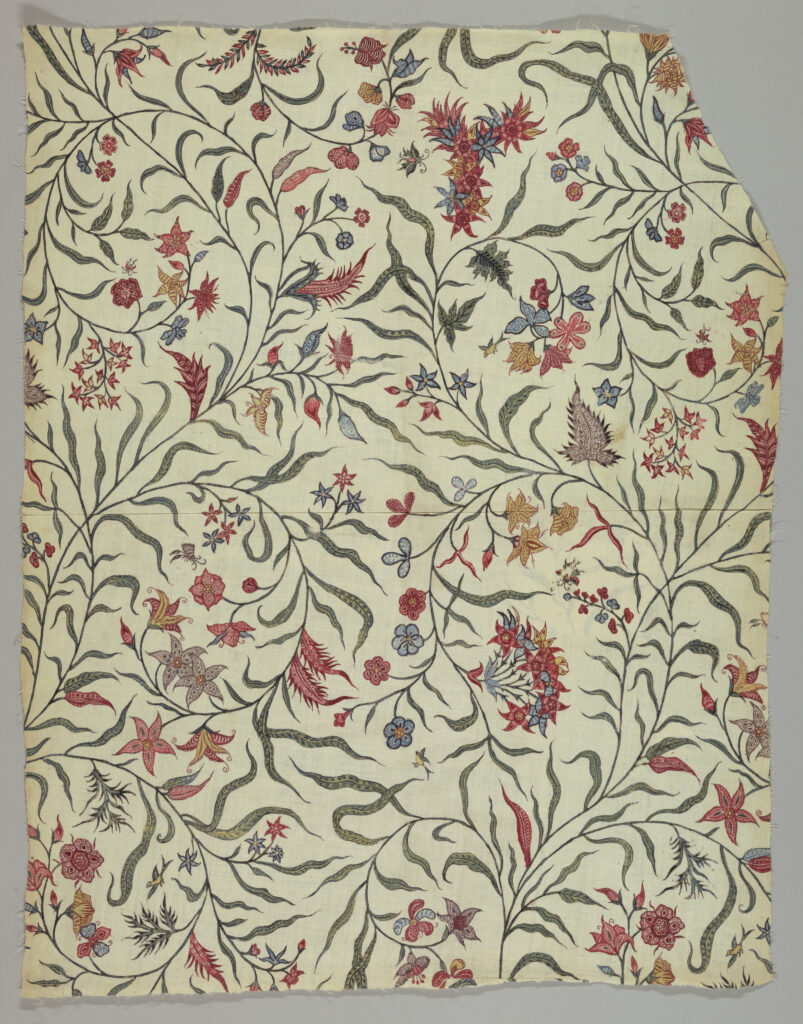
The magic lay in the chemistry as much as the artistry. Artisans treated the cotton with mordants, substances that helped natural dyes bind to the fibres, while resist techniques protected selected areas from colour. Natural dyes could then create the rich reds, indigos, yellows and blacks that became characteristic of Indian painted cottons. In kalamkari traditions, artists could draw directly onto the fabric with a pen-like bamboo or reed tool, building up the design through multiple stages of washing, dyeing, mordanting and drying. This humble fabric goes through around 17 meticulous steps, and roughly 8-10 craftsmen are involved, from start to finish.
And then there was the design. Artisans created elaborate botanical compositions, flowering trees, vines, birds and other natural forms, often arranged with a sophistication that allowed the textile to be appreciated from every angle. The celebrated Tree of Life became one of its most recognisable motifs. Some textiles were made for Indian courts and religious settings; others were anglicised for overseas markets.
From Calicut To The World
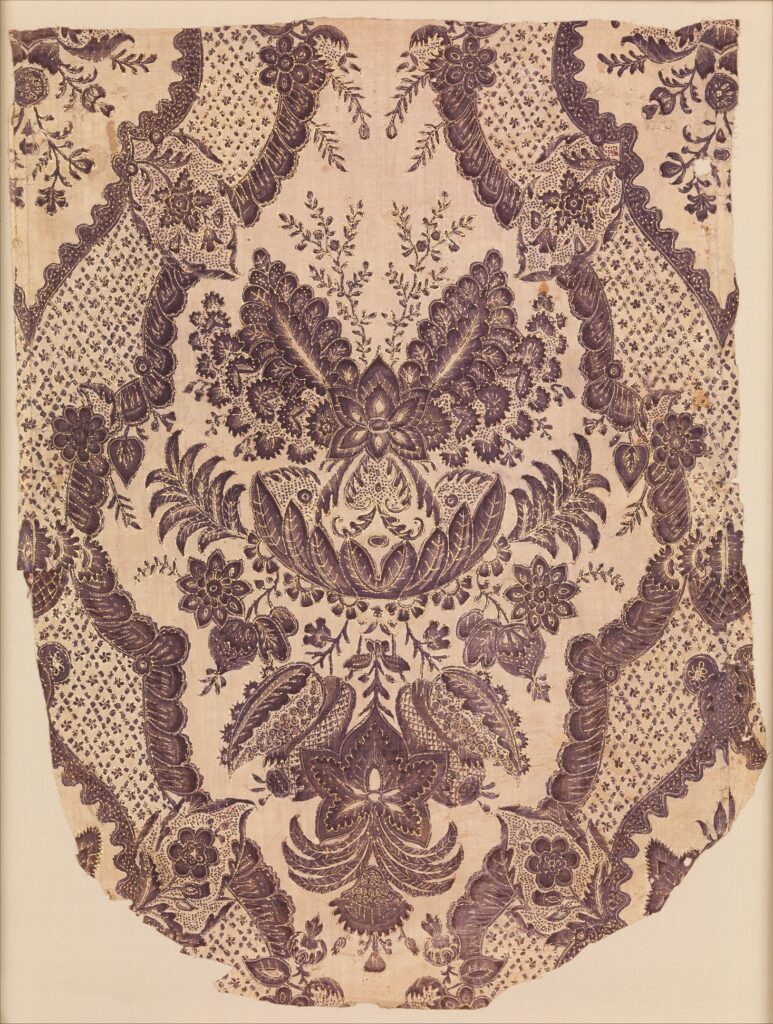
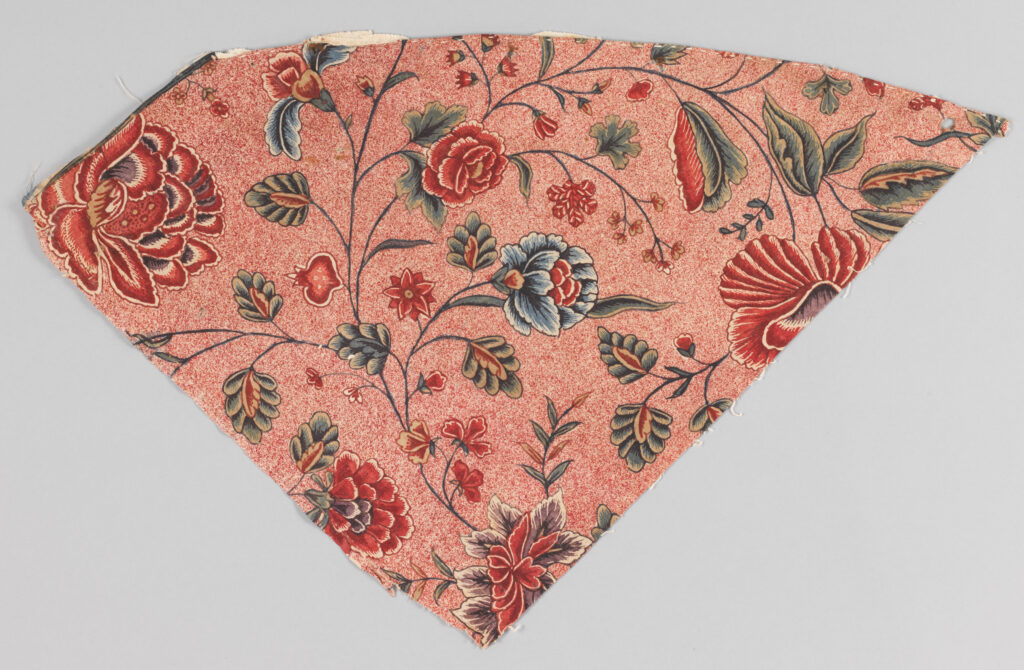
Chintz’s other name, calico, offers one clue to the extraordinary journey of Indian cotton. It comes from Calicut, the historic port city on India’s Malabar Coast, where Europeans encountered and traded cotton cloth. But it is important not to confuse calico with chintz. Calico broadly referred to cotton cloth associated with the Indian trade, while the elaborately decorated, painted, printed and glazed varieties eventually became known in Europe as chintz.
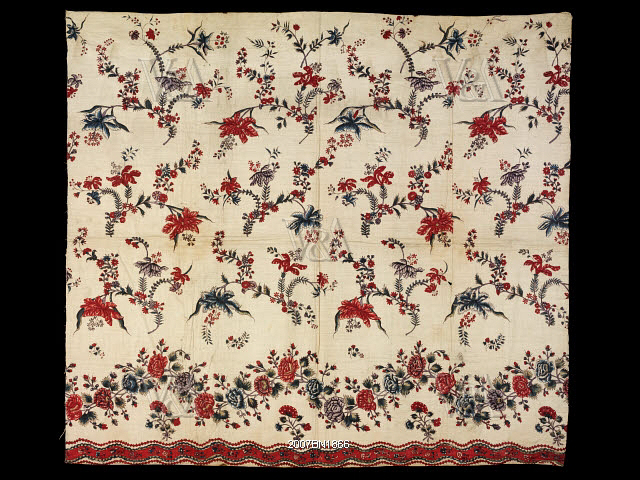
Indian cotton textiles had been traded across Asia for centuries, but from the late 15th and early 16th centuries, European maritime trade opened up an enormous new market. As the East India Company and its Dutch and French rivals shipped bales west, Indian artisans did what great craftspeople do: they adapted. Hindu, Muslim and European influences mingled in the designs, and painters absorbed foreign motifs into their own visual language. At first the cloth was used mainly for furnishings.
Soon chintz moved from the bed to the body. The appeal was immediate. European wardrobes were dominated by wool, linen and silk, while Indian artisans had developed extraordinary expertise in producing lightweight cottons capable of carrying brilliant colour. Chintz was washable, relatively light, visually spectacular and unlike almost anything European mills could produce. It was used for clothing, bed hangings, curtains, wall coverings and upholstery, transforming wardrobes and interiors.
Europe Banned It, And Europe Kept Wearing It
By the late 17th century, the craze had become a serious commercial problem for European textile manufacturers. France and England introduced restrictions and bans designed to protect their domestic textile industries. France prohibited the manufacture, import and wearing of chintz for long periods between 1686 and 1759, while Britain imposed restrictions on imported Indian printed cottons, with legislation tightening during the early 18th century.
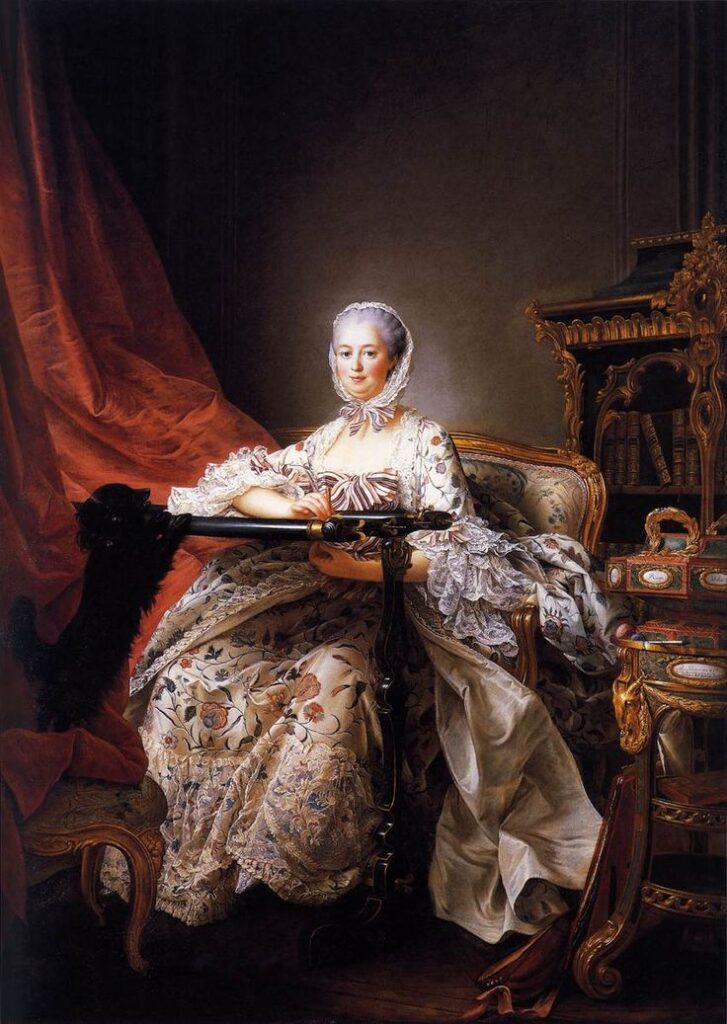
Naturally, fashion did what fashion has always done when told it cannot have something: it wanted it even more. The bans were difficult to enforce, and chintz continued to appear in fashionable wardrobes and interiors. The Court of Versailles sat outside the law, fashionable courtiers carried on regardless, and Madame de Pompadour was famously painted in a chintz gown. European manufacturers also began producing their own imitations, attempting to reproduce the Indian techniques and designs.
That imitation would have consequences far beyond fashion. As European manufacturers tried to mechanise cotton production and reproduce the qualities of Indian textiles, developments in spinning, weaving and printing became part of the technological momentum that eventually fed into the Industrial Revolution. Indian chintz, in other words, wasn’t just a textile trend, but it exposed the commercial and technological possibilities of cotton on an industrial scale.
Chintz Crosses The Atlantic
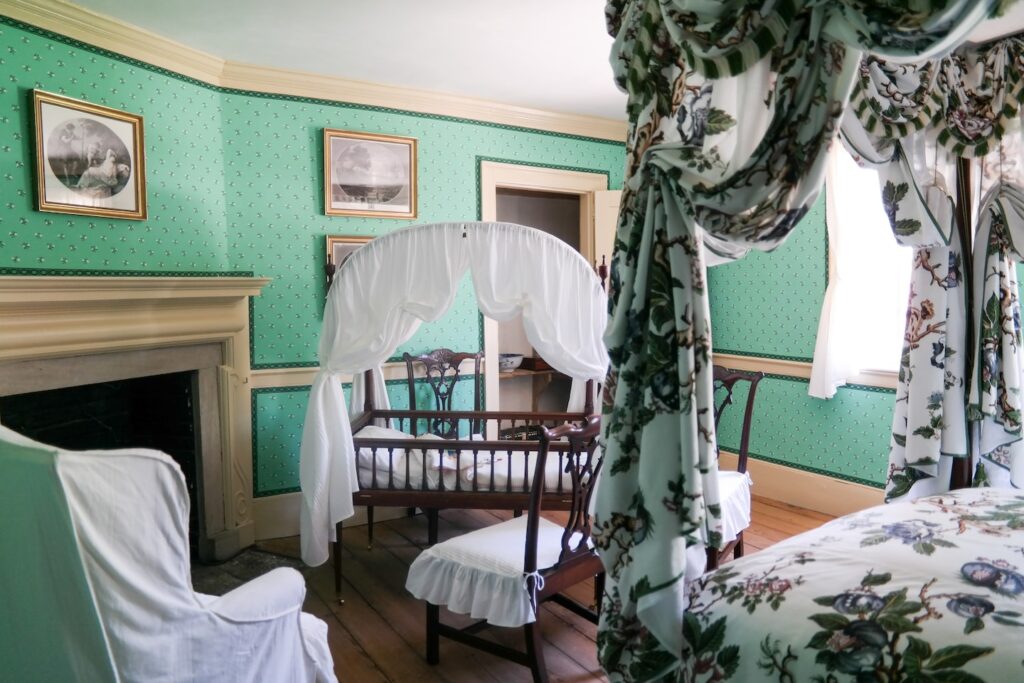
The textile’s global tour didn’t stop in Europe. By 12th century, chintz travelled to North America to become a decorator’s darling. One of its most charming historical traces can be found at Mount Vernon, George Washington’s Virginia estate. The Washingtons had a room known as the Chintz Room, decorated with floral textiles and wallpaper inspired by the fashion for Indian cottons.
Chintz also reveals something fascinating about early American fashion: it was not simply a decorative choice but a marker of status, aspiration and access. Surviving records and garments show Indian chintz being worn as gowns and used for bed hangings and upholstery. Its story in America also intersects with the unequal realities of slavery, class and access to fashionable dressing, which reminds us that the history of luxury textiles is never as pretty as the textile. Eventually, European manufacturers succeeded in producing their own versions of printed cotton. But the flood of cheaper imitations also changed how chintz was perceived. What had once been an exotic luxury became increasingly associated with florid decoration. By the 19th century, “chintzy” could be used pejoratively to describe something overly ornate or excessively floral.
From Fashion Darling To Interior-Design Icon
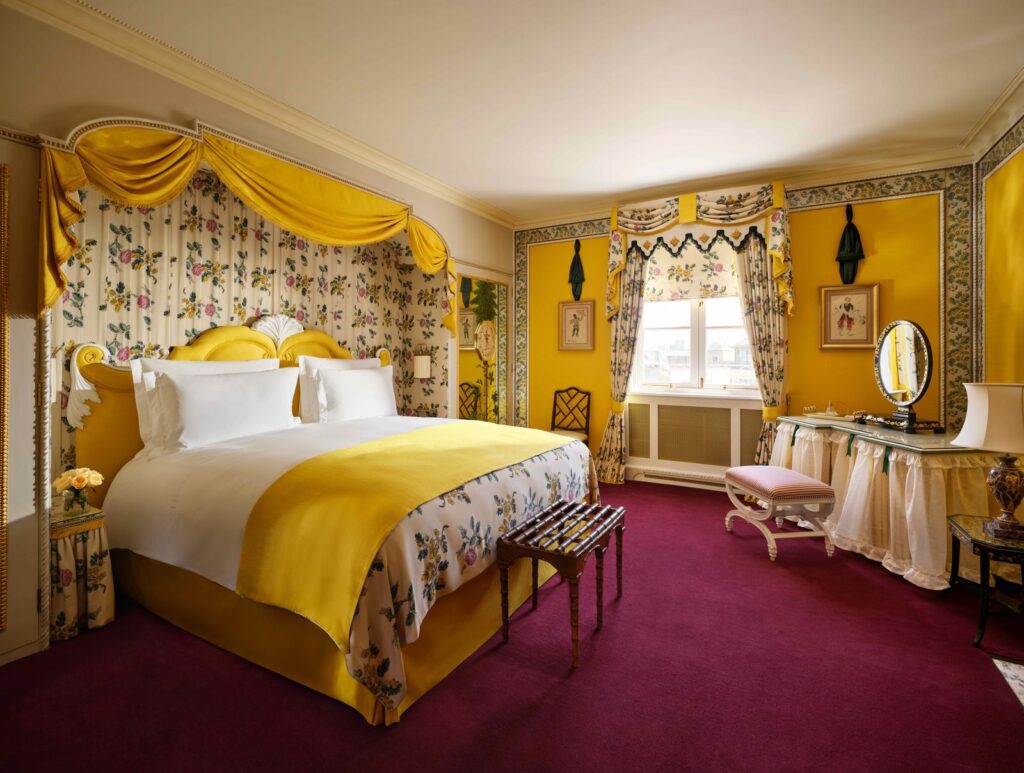
Chintz’s second life was largely played out indoors. It became associated with English country-house interiors, appearing on curtains, upholstered furniture, bed hangings and wallpaper. By the 20th century, designers such as Sister Parish and Mario Buatta embraced its abundance, with Buatta becoming so synonymous with exuberant floral interiors that he was nicknamed the “Prince of Chintz”. Today, The Oliver Messel Terrace Suite at The Dorchester property in London boasts interior design that pays a homage to chintz.
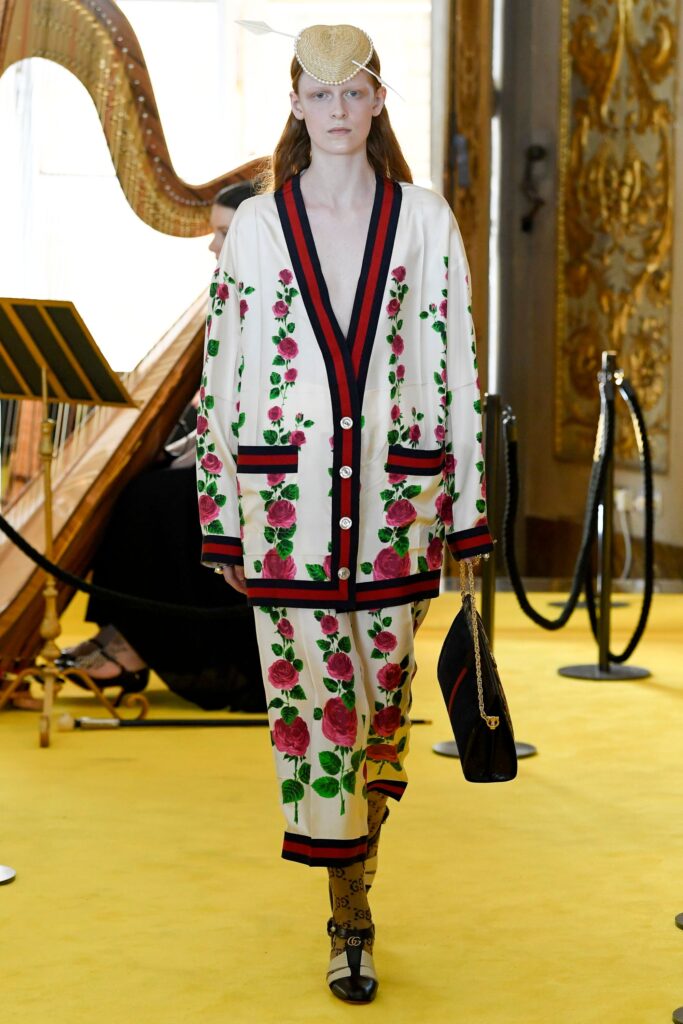
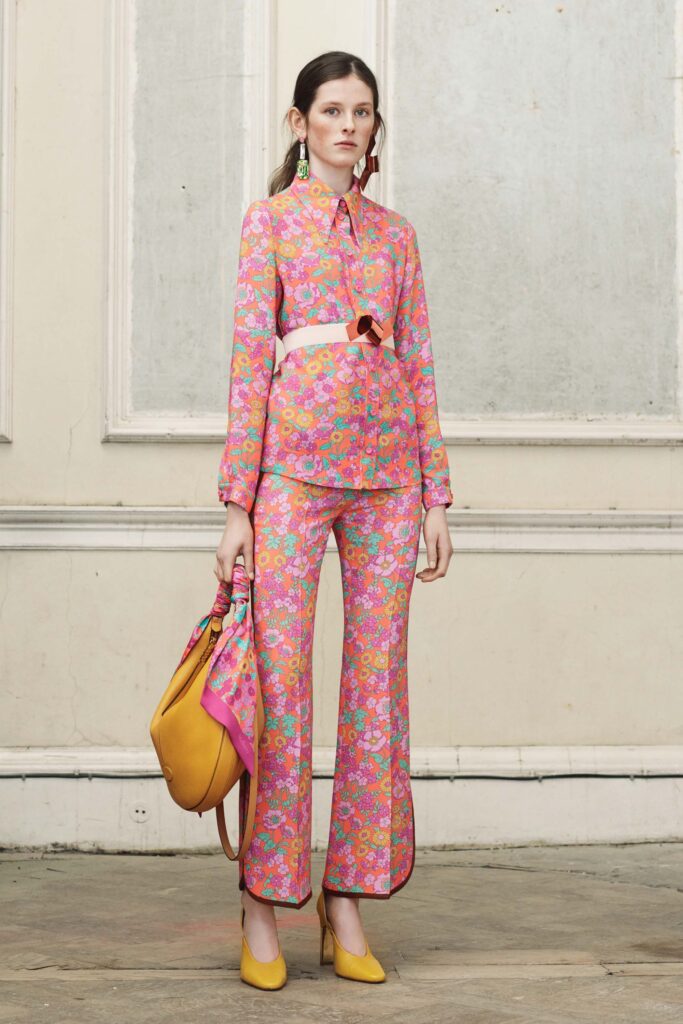
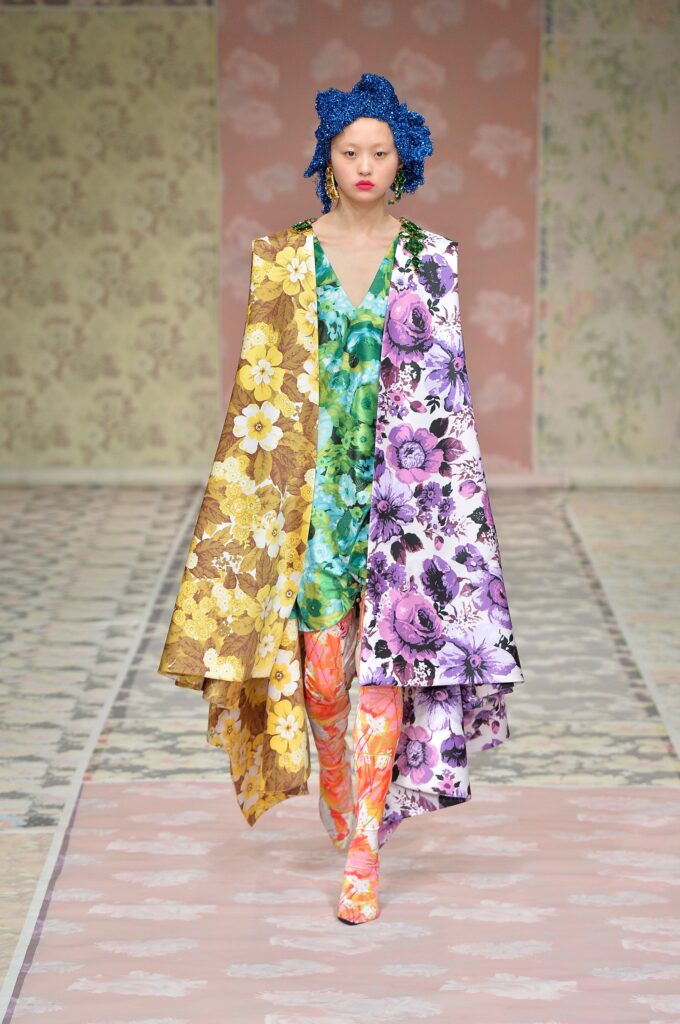
Fashion, too, kept flirting with it. Laura Ashley’s romantic floral dresses helped cement its connection with an idealised English countryside, while Princess Diana’s love of florals brought the aesthetic into the fashion mainstream in the ‘80s. After a brief tryst with being considered decidedly dated, chintz returned with a vengeance. Gucci’s Cruise 2018 collection embraced lush botanical prints, followed by Richard Quinn’s floral-heavy autumn/winter 2018 collection and Mulberry’s equally exuberant take. Suddenly, the once-fusty floral was back on the fashion radar, proving chintz could be romantic, rebellious and remarkably modern.
Indian Designers Are Putting The Print Back Into Its Rightful Hands
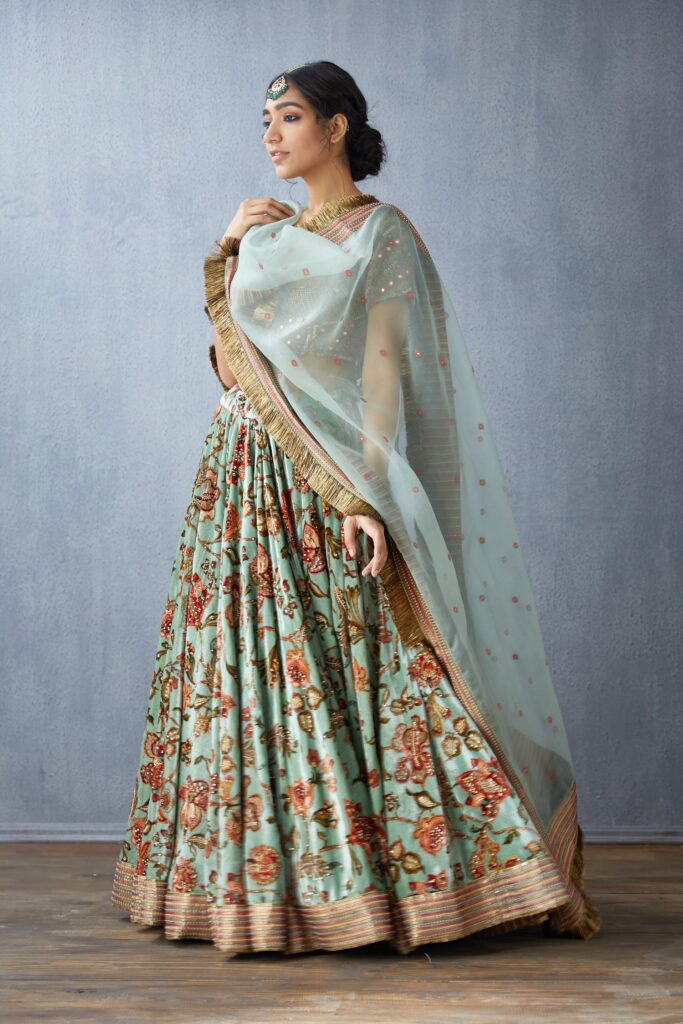
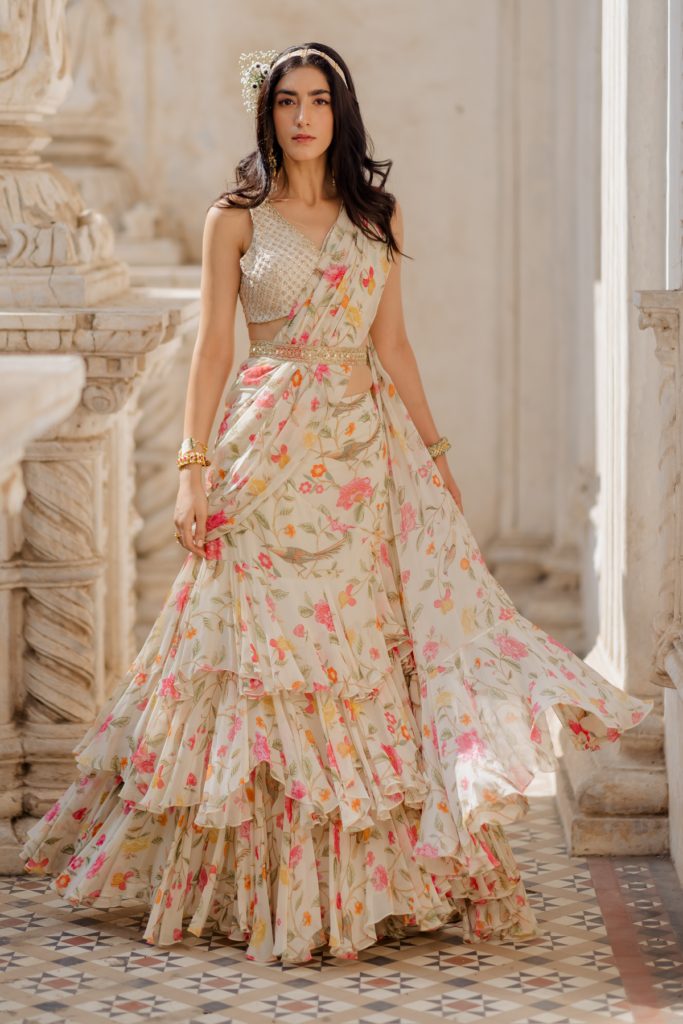
Fast forward to 2025 and chintz has once again shed its fusty reputation. The current appetite for maximalism, vintage dressing, cottagecore and botanical prints has made chintz ripe for reinvention. And Indian designers are giving it another homecoming. Torani, known for its maximalist approach to festive dressing, has repeatedly explored vintage chintz florals. Karan Torani has translated the print into saris, lehengas and contemporary occasion wear. Most recently, Tamannaah Bhatia stepped out in a vibrant yellow printed Torani sari, featuring a blend of chintz and chevron. Paulmi & Harsh has worked chintz into kurtas, anarkalis and maxis.
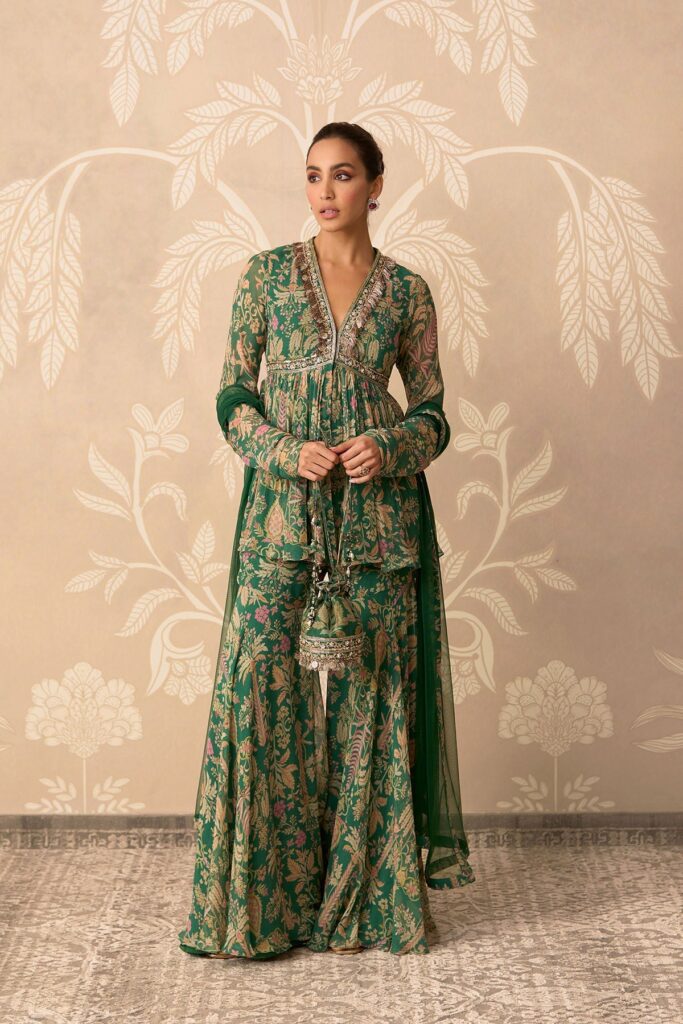
Ridhi Mehra has often populated her collections with chintz-inspired prints to craft trousseau-worthy investments like her signature ruffle saris, sharara sets and lehengas.
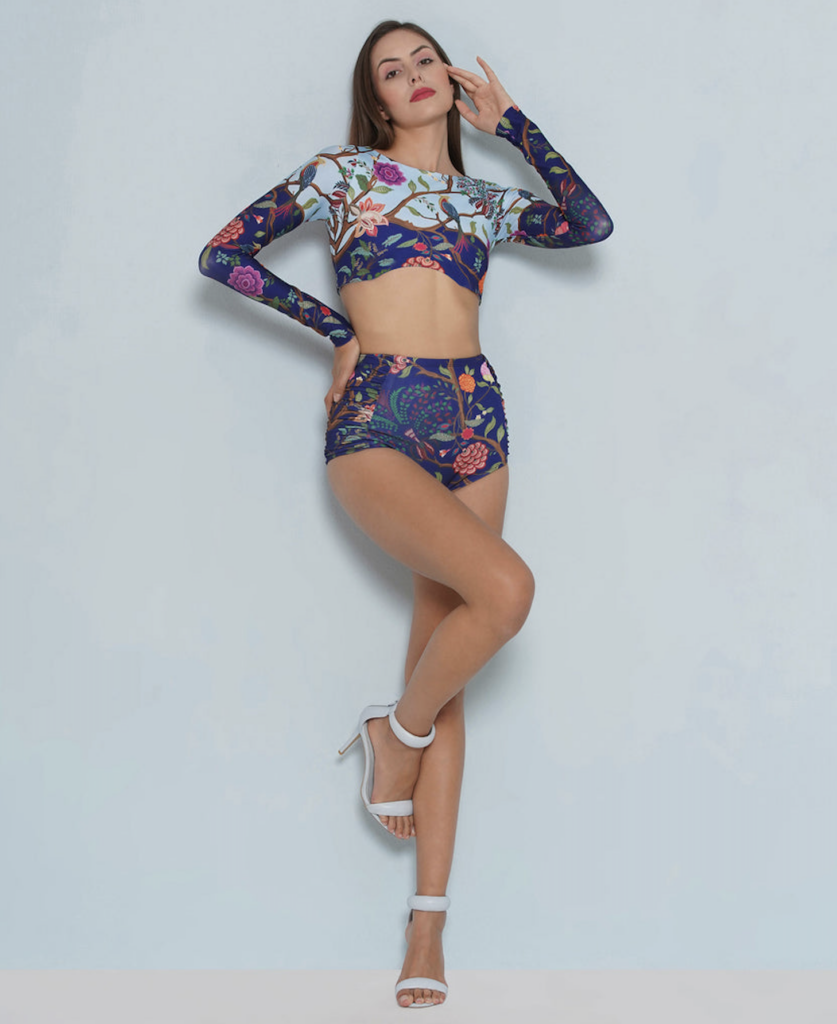
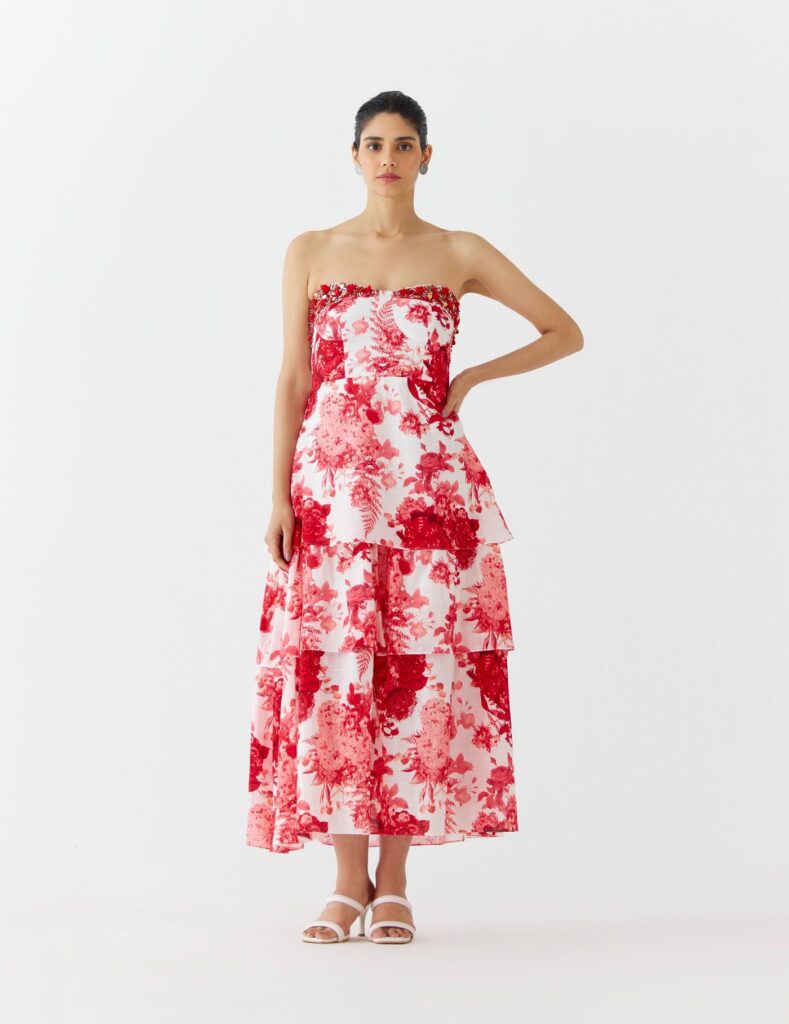
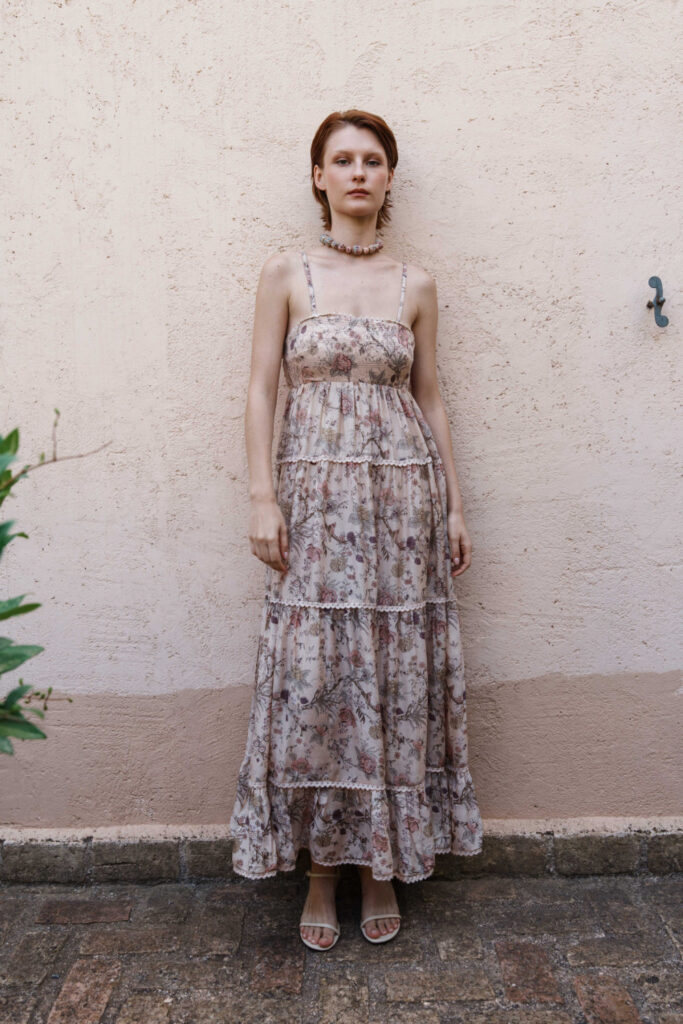
Then there is the holiday wardrobe. Limerick by Abirr N’ Nanki has taken chintz into resort territory. The brand has put exuberant florals on easy dresses, breezy co-ord sets and even swimwear. Suddenly, a textile once associated with European drawing rooms is sunning itself beside an infinity pool. Shruti Sancheti has explored chintz-inspired motifs through contemporary silhouettes, while Studio RIGU has interpreted the floral vocabulary in easy, youthful dresses.
And perhaps that is the most fitting twist in chintz’s long, globe-trotting story. It left India centuries ago, became a European obsession, was banned, copied, industrialised, mocked and eventually rediscovered. Now Indian designers are reclaiming its visual language in ways that make it of-the-moment.
Its journey is proof that textiles can travel further than people, cross cultures, change economies and survive centuries of fashion’s notoriously fickle attention span. The next time you spot those gloriously busy blooms, look a little closer. Behind the pretty petals is a story of Indian ingenuity, manual dexterity, global trade, colonial power, craftsmanship and an almost unreasonable ability to come back into fashion.
Not bad for “just a floral print”.