














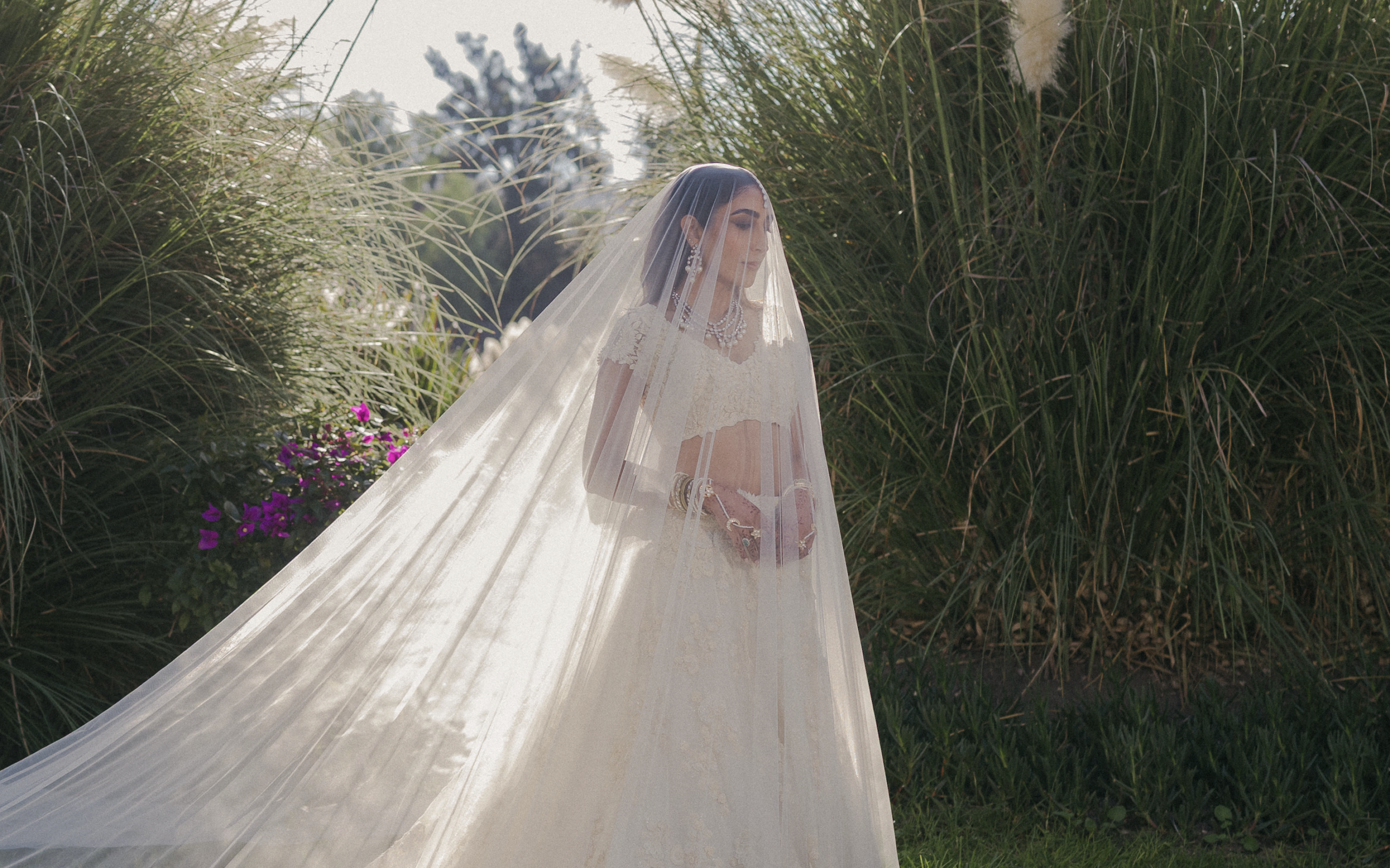
Veils have long been associated with Western bridal fantasy, all lace and tulle and that slow-motion walk down the aisle. There’s something rather theatrical about the British take on it too, the church, the “you may kiss the bride” moment, the veil lifted with all the ceremony of a curtain call. It has always been shorthand for a wedding steeped in tradition, heritage and old-school romance. For decades, the veil has been shorthand for the white wedding, steeped in tradition, heritage and old-school romance. But here’s the thing: the veil is hardly foreign to South Asian culture. We have our own centuries-old traditions of veiling, from the ghunghat to the parda drawn over the head. Ahead, we chart out how desi brides are putting a modern spin to it.
The veil versus the dupatta
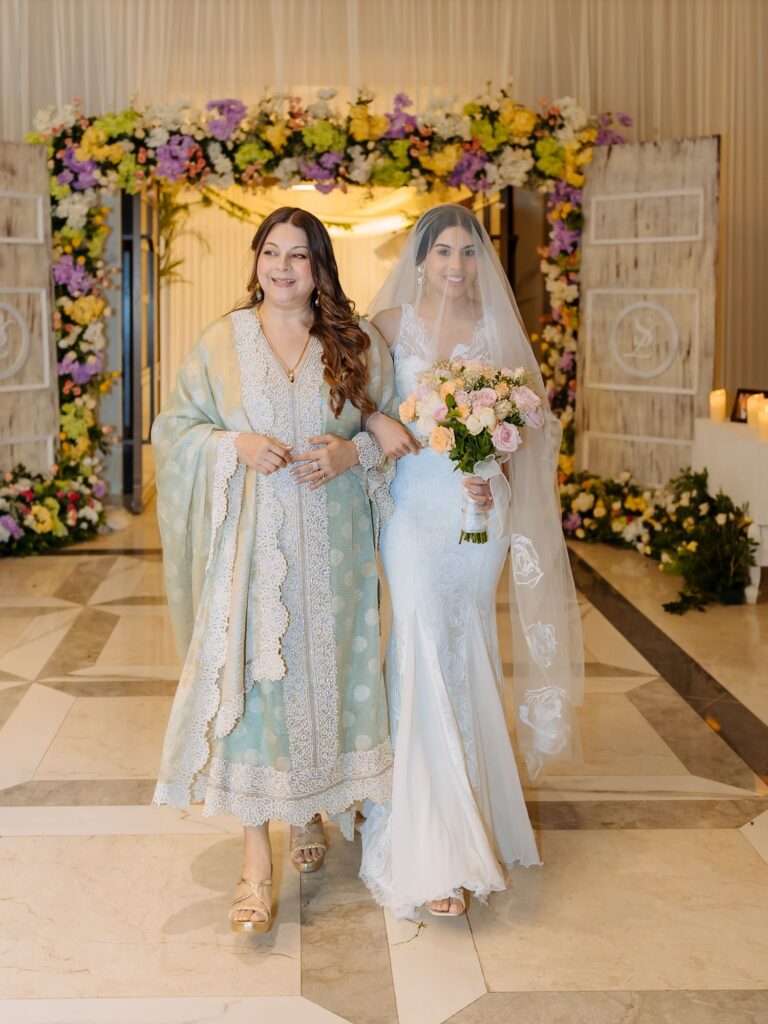
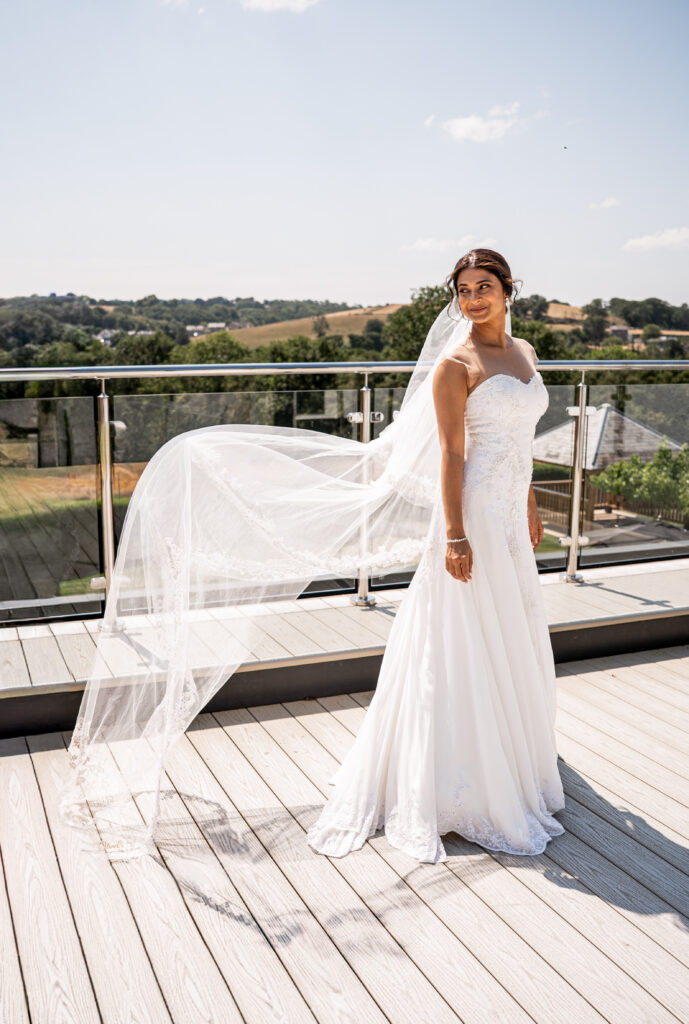
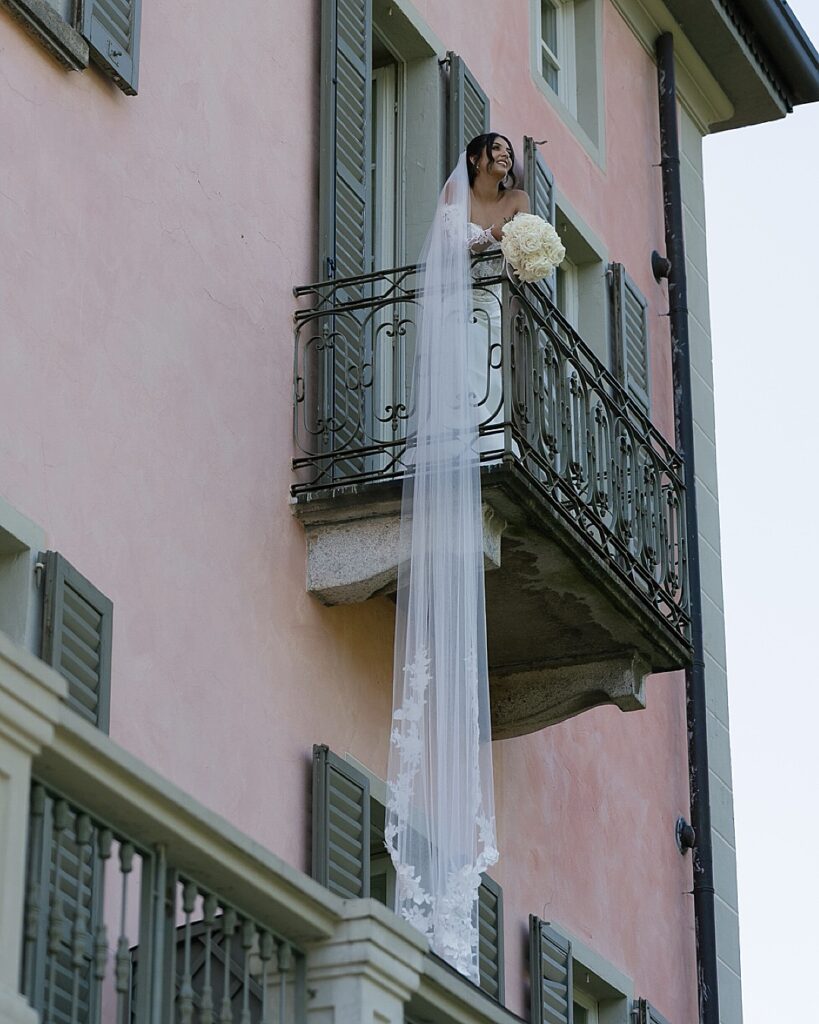
In South Asian weddings, the veil is hardly a new idea. We have the indelible version of the veil, the dupatta. A dupatta is woven into the outfit itself. Draped over the head, pinned at the shoulders or layered across the lehenga, it is an intrinsic part of bridal dressing. For centuries, women across the region have also covered their heads with a ghunghat, whether extended from a dupatta or the pallu of a sari, making a rendition of the veil an undeniable part of our cultural heritage. From traditional bridal dressing to ceremonial customs, some version of a veil has always existed in the South Asian wardrobe, so there is no debating that the idea itself is rooted in our culture.
What feels fresh now is the way modern brides are interpreting it. Rather than using the dupatta itself as the veil, brides are adding a separate, dedicated layer to the look. It sits alongside the traditional dupatta, often as the outermost layer, and introduces a sense of scale and movement that looks fashion-forward. Think of it as a double-dupatta moment taken up a notch, with a long, dramatic trail that follows the bride down the aisle or towards the mandap. It accentuates the height and volume of the silhouette, frames the bride beautifully from behind and adds an element of theatre to the entrance. The dupatta remains rooted in the outfit, while the veil becomes the pièce de résistance that turns the bridal entry into a cinematic moment. That distinction is exactly why brides are reaching for it. The veil brings a sense of occasion that a dupatta, however beautifully embroidered, does not quite replicate on its own.
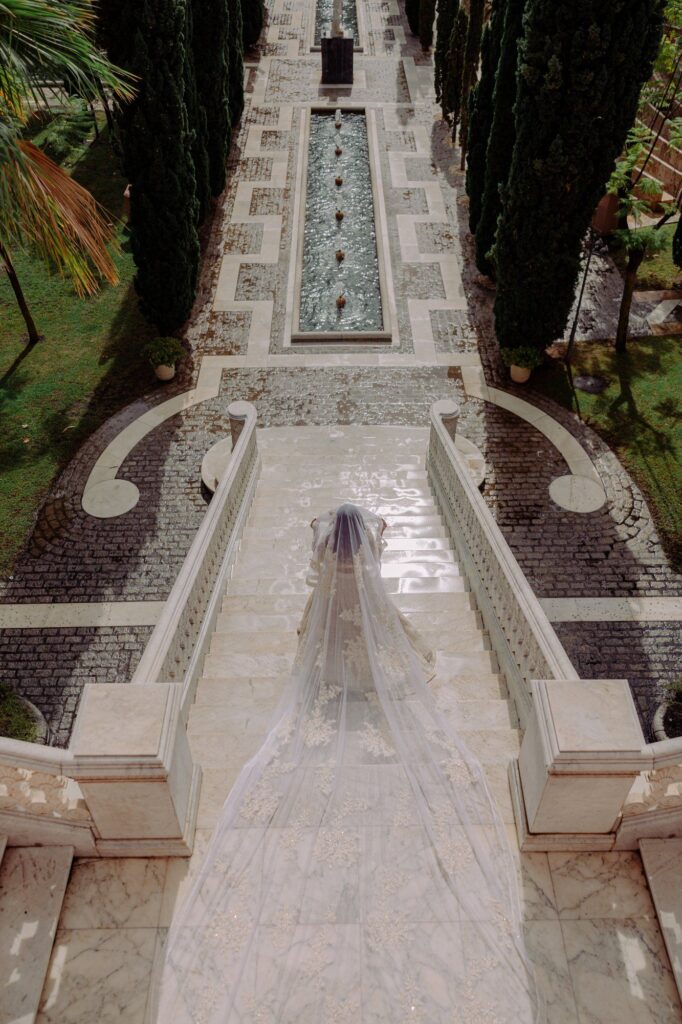
There is also something to be said for the sheer scale of it. A sweeping veil trailing behind a bride as she walks towards the mandap instantly adds a sense of occasion. For brides already opting for the increasingly popular double-dupatta look, introducing a veil as the outermost accompaniment that accentuates height, volume and grandeur of the silhouette. One dupatta can remain traditional, while the veil brings the fashion-forward flourish.
How to make a veil your own
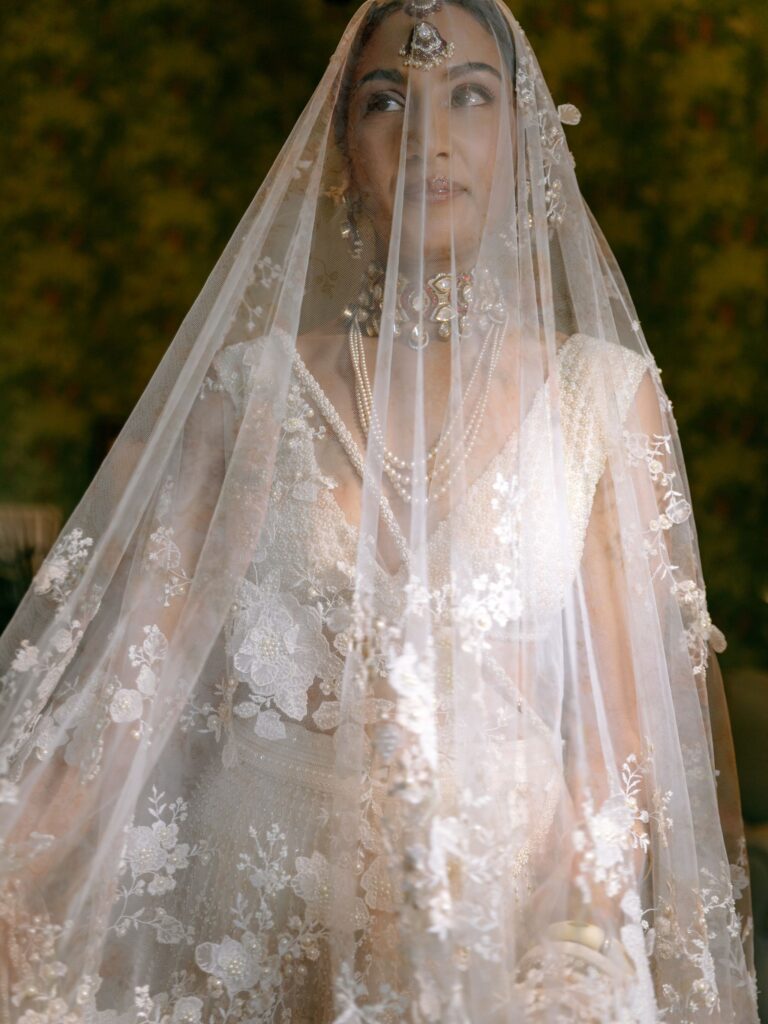
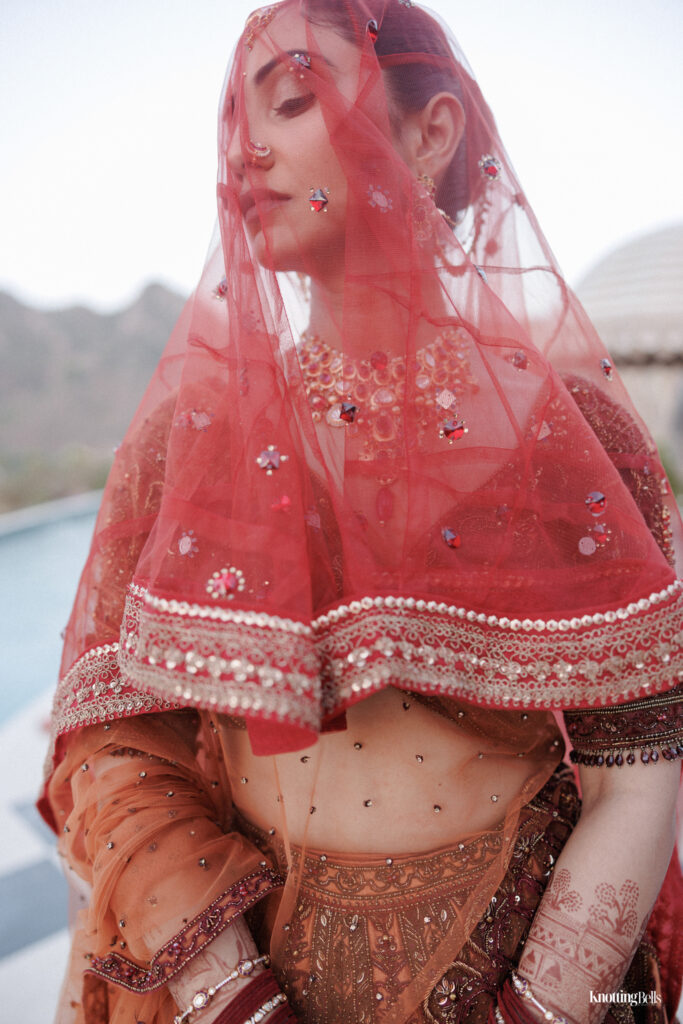
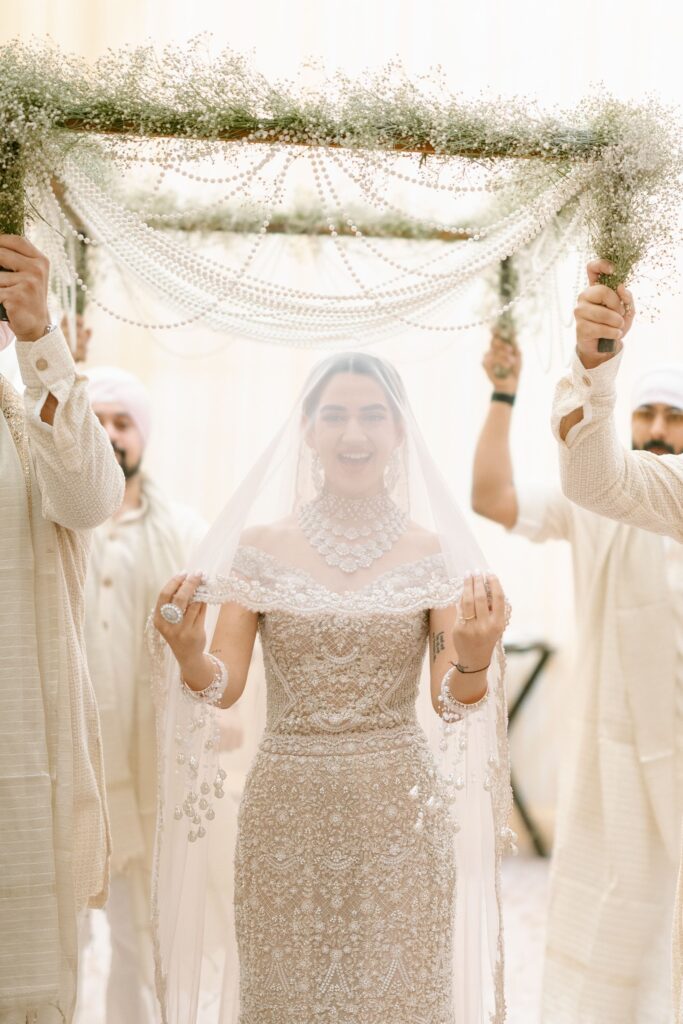
The best part? It does not have to look like it came straight out of a Western bridal moodboard. Customisation is where the veil really comes into its own for a South Asian wedding. Brides can personalise it with their names, wedding dates, monograms, meaningful phrases, motifs or even tiny references to their love story. Embroidery, borders, scalloped edges, pearls, sequins and delicate embellishments can all make the veil feel like an extension of the bridal lehenga or sari rather than a last-minute accessory.
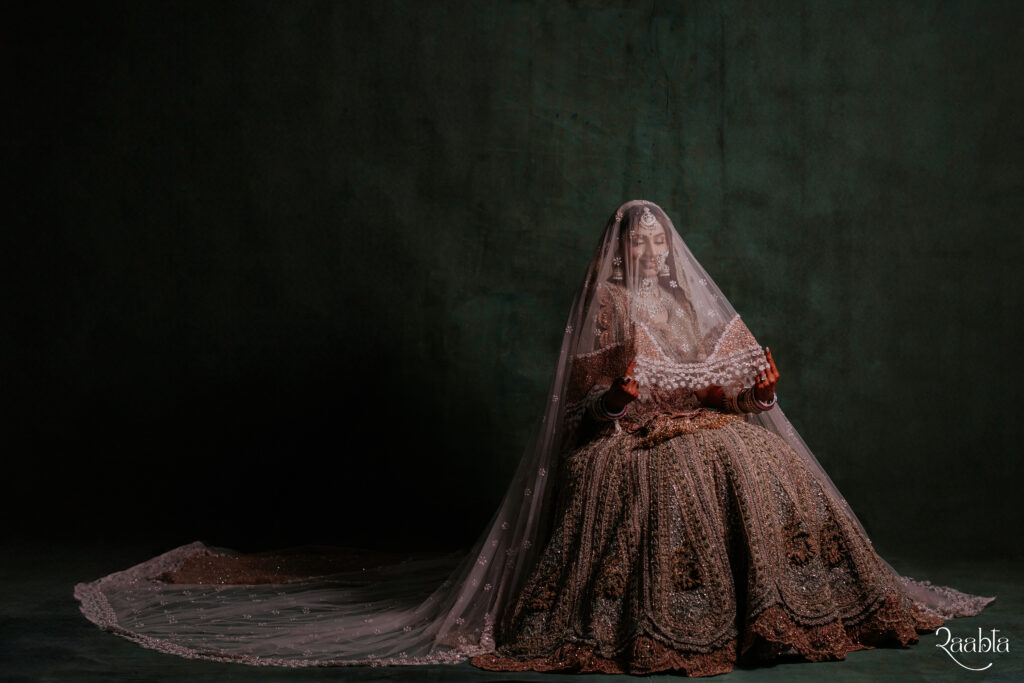
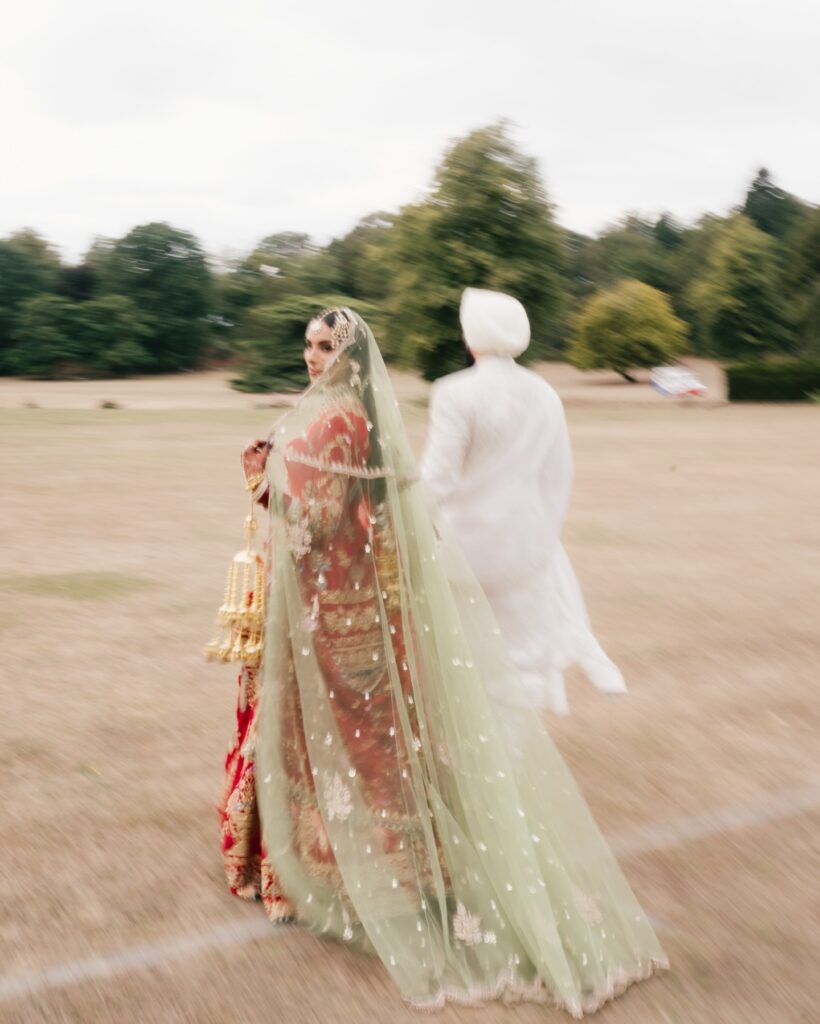
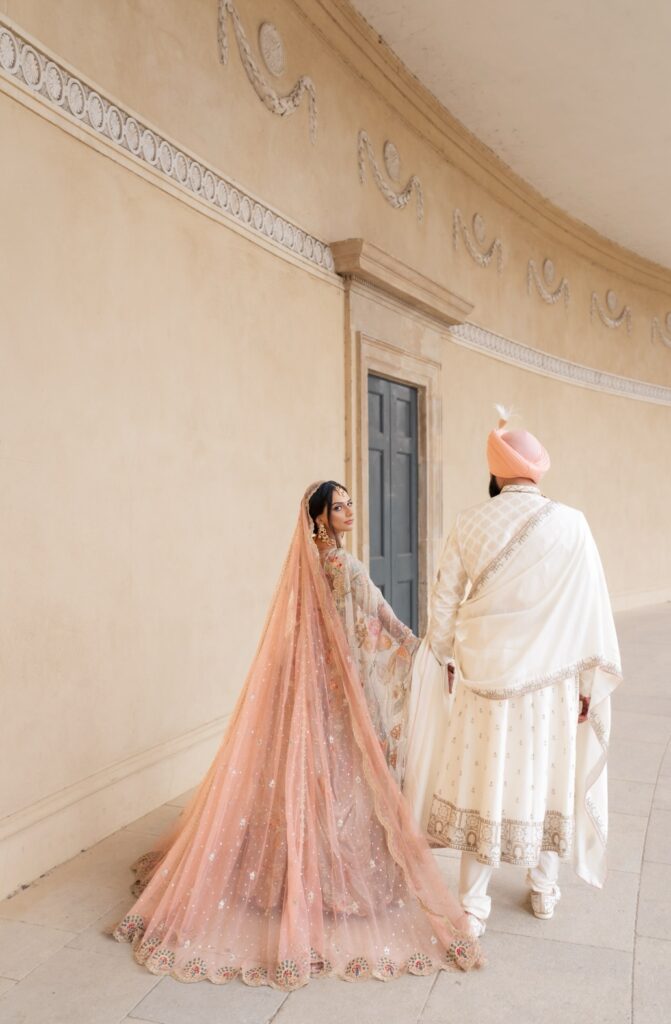
Styling it is equally open-ended, leaving a lot of room for creativity. A bride can choose a veil in the same palette as her lehenga for a tonal, seamless effect. It can also be used to inject a contrasting colour. It can pick up a shade from the embroidery, mirror the bride’s jewellery or even complement the groom’s outfit for a coordinated wedding look. For brides who want maximum impact without committing to the veil for the entire ceremony, it can simply be removed after the bridal entry. The result is essentially two bridal looks in one: a dramatic entrance moment, followed by the more traditional silhouette once the celebrations begin. And practically speaking, the veil doesn’t have to last the whole event. Most brides remove it right after the entry, once its job of creating that cinematic moment is done, switching to a lighter look for the rest of the ceremony.
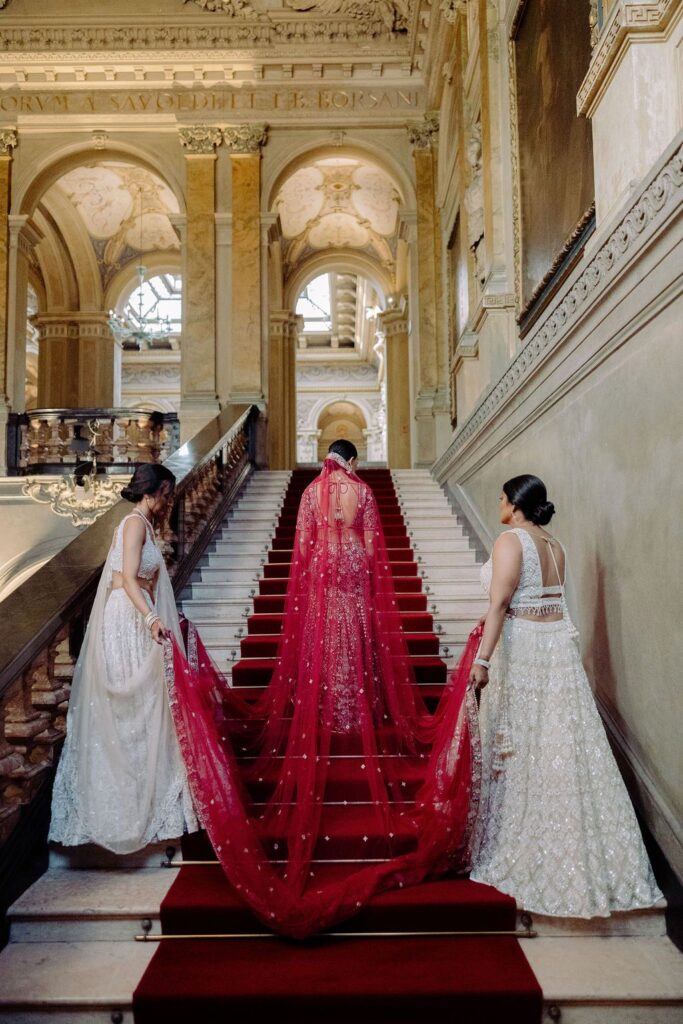
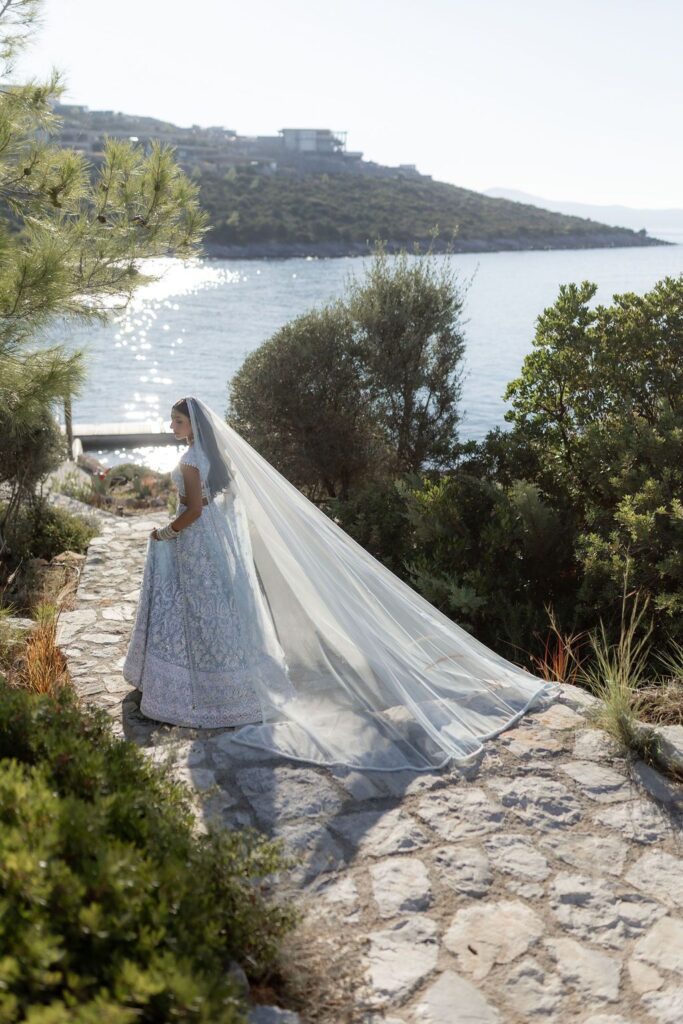
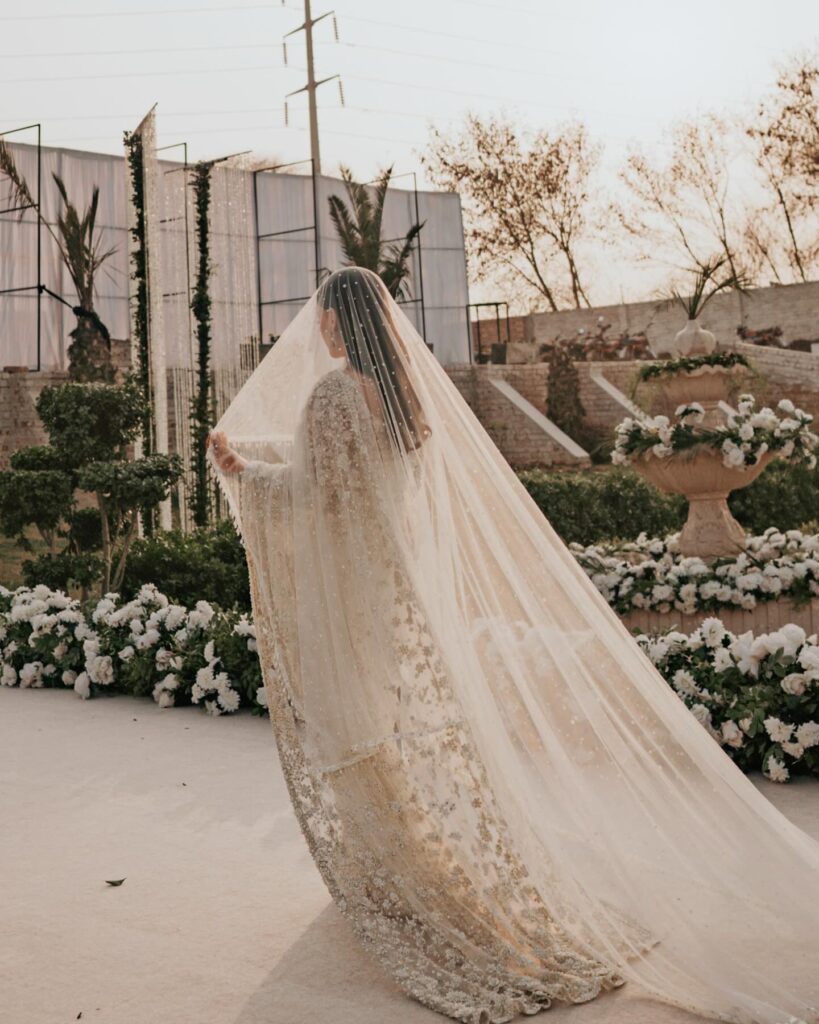
That is exactly why the veil works so well for the modern South Asian bride. It borrows the opulance of the classic bridal veil but leaves plenty of space for personal interpretation. Whether it is sweeping, embroidered, minimal or unapologetically maximalist, this is one Western bridal accessory that can find a natural, striking place in desi weddings, proving that some traditions are worth borrowing.